


Indigenous Peoples Film Festival Copenhagen
Indigenous Peoples Film Festival is Denmark’s festival for films by and about indigenous peoples. In 2026 the festival will take place from Oct. 1st – 4th.
Indigenous Peoples Film Festival is a collaboration between IWGIA, Empire Bio and The Greenlandic House in Copenhagen. IWGIA (International Work Group for Indigenous Affairs) works to promote and defend Indigenous Peoples’ rights around the world. You can find more information about their work here.
Planning to watch several films at the Indigenous Peoples Film Festival? Or do you want to gather your friends and get a group discount? Buy our Festival Multi-Ticket Pass and get 4 tickets for the price of 3!
Thursday 1st of October at 6:30 PM
OPENING NIGHT: INDIGENOUS WOMEN OF THE ARCTIC
Join us for the opening evening of the Indigenous Peoples Film Festival in Copenhagen, a celebration of the strength, resilience, and vital role of Indigenous women across the Arctic, including Kalaallit Nunaat (Greenland), Alaska (USA) and Inuit Nunangat (Canada).
Through a curated selection of short films by and about Arctic Indigenous women, we will explore stories of struggle and resistance, as well as cultural continuity, revitalization, and hope. These films highlight Indigenous women as culture bearers, storytellers, leaders, and agents of change within their communities.
FILM SCREENINGS:
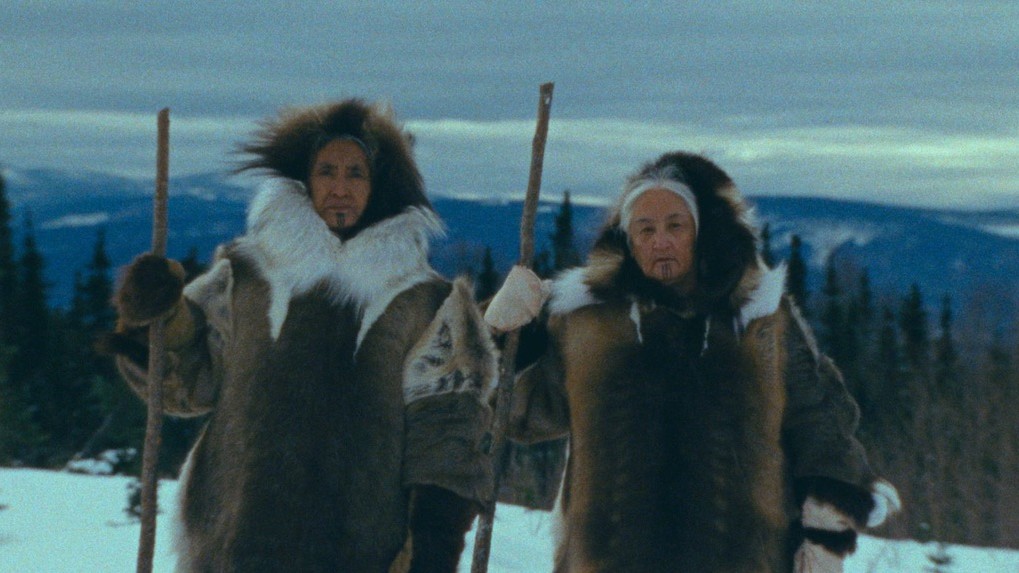
TWO OLD WOMEN
By Princess Daazhaii Johnson, 2025, 14 min.
Two elderly Gwich’in women —Ch’idzigyaakand Sa’—find themselves abandoned by their tribe during a brutally harsh famine.Devastated and scared of what the future holds, Sa’ must convince Ch’idzigyaak that their survival is worth a fight and ‘if we are going to die, then we should die trying to live.
ANGAKUSAJAUJUQ (The Shaman’s Apprentice)
By Zacharias Kunuk, 2021, 21 min.
A young shaman must face her first test—a trip underground to visit Kannaaluk, The One Below, who holds the answers to why a community member has become ill. Facing dark spirits and physical challenges, she must trust her mentor’s teachings and learn to control her fear.
IVIKKISARTOQ KINGULLEQ (The Last Grass Seamstress)
By Arina Kleist, 2024, 18 min.
Short-doc about 82-year-old indigenous South Greenlandic grass sewing specialist, Marie Josefsen, and her story of probably being the last grass seamstress in Greenland. Growing up, Marie was surrounded by her mother and aunts who sewed lyme grass into baskets, coasters, and etc. Her father and uncles would collect the grass on hunting islands with their kayaks. The arts & craft had been passed down from her foremothers in her family for generations. After years of being active in grass sewing, she’d thought to herself, what if she passes away? Then the arts and craft of grass sewing would die out in Greenland…
NIGIQTUQ (The South Wind)
By Lindsay McIntyre, 2023, 17 min.
In 1938, having left herNunavuthome with her mother Kumaa’naaq, youngMarguerite must negotiate the unspoken pressures of a new life in the South. When anextraordinary letter arrives from home, Marguerite discovers what’s really expected of her.Based on a true story.Logline:Young Marguerite and her mother Kumaa’naaq must negotiate the unspoken pressuresof a new life in the South after leaving their home in Nunavut in 1938. Based on a true story.
Following the screenings, director of Nigiqtuq – The South Wind, Lindsay McIntyre, will join us for a conversation on the importance of telling these stories. Together, we will reflect on how Indigenous women are represented, why these narratives matter, and how we can move beyond stories of adversity alone to create space for perspectives that center strength, agency, and future possibilities.
The evening will conclude with a performance by Nive Nielsen from Kalaallit Nunaat, celebrating the creativity, resilience, and cultural power of Indigenous women and Indigenous communities across the Arctic.
Kalaallit Nunaat (Greenland)/Alaska (USA)/Inuit Nunangat (Canada), 2026, 120 min.
Directors: Div.
Friday 2nd of October at 5 PM
IWGIA SHORT FILMS
A collection of short films funded by IWGIA + Talk with IWGIA and David Borish.
VOICES FROM THE SACRED MOUNTAINS (13 min.)
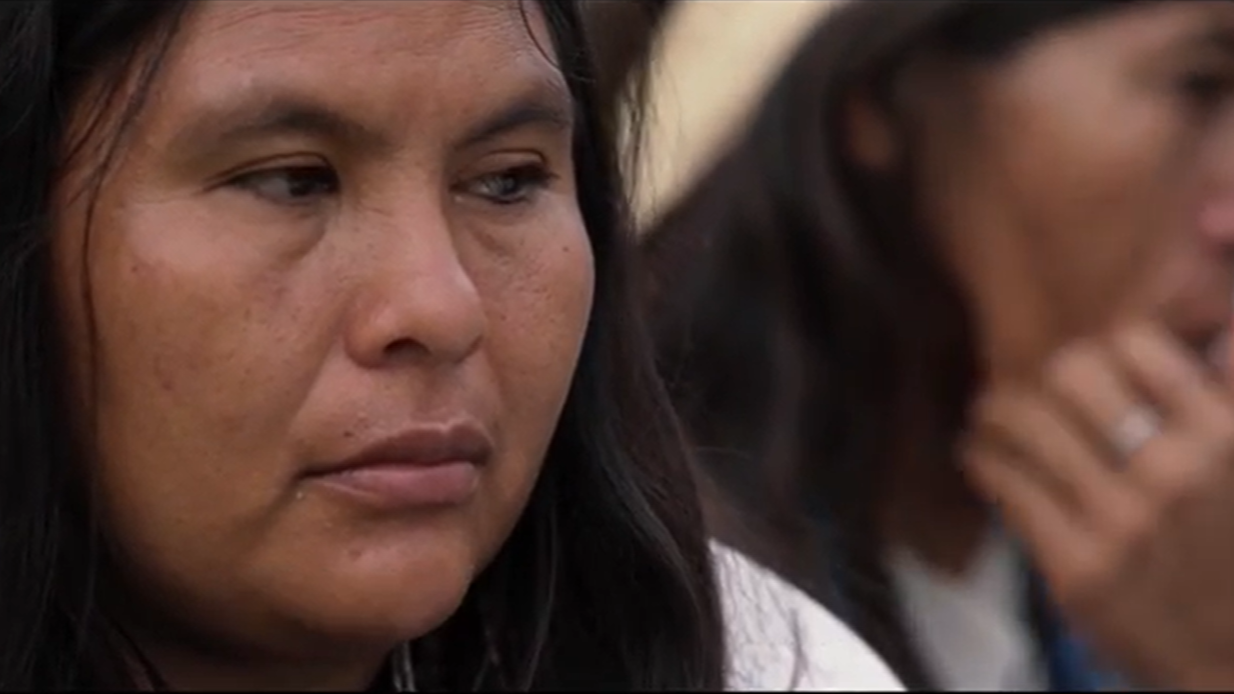
Documents Colombian Arhuaco communities’ struggle defending ancestral territory against mining concessions while pursuing sustainable development on their own terms.
TIME IS WATER (14 min.)
Depicts Peruvian Amazon Indigenous peoples creating the Wampis Nation autonomous territorial government to defend livelihoods from extractive industries.
WHEN CONSERVATION BECOMES EXILE – BATWA VOICES FROM BWINDI FOREST (20 min.)
IHAMBA — meaning “forest” in the local Rukiga language — is a 20-minute documentary film tracing the enduring bond between the Batwa people and Bwindi Impenetrable Forest in southwestern Uganda. When Bwindi was gazetted as a national park in the early 1990s, the Batwa were forcibly removed from the only home they had ever known. Since then, they have faced poverty, marginalization, and violence, and prohibited from returning to gather food, medicine, and access sacred ancestral sites. Co-created over two years with a Batwa Advisory Committee and local communities, IHAMBA weaves together voices from youth to Elders across 10 Batwa settlements in the Kanungu District. The film puts an essential human face on conservation-driven displacement, and bears witness to Batwa resilience, memory, and their ongoing fight for justice.
Columbia/Peru/Uganda, 2026, 77 min.
Directors: Misc.
Friday 2nd of October at 7 PM
TOITU: VISUAL SOVEREIGNTY
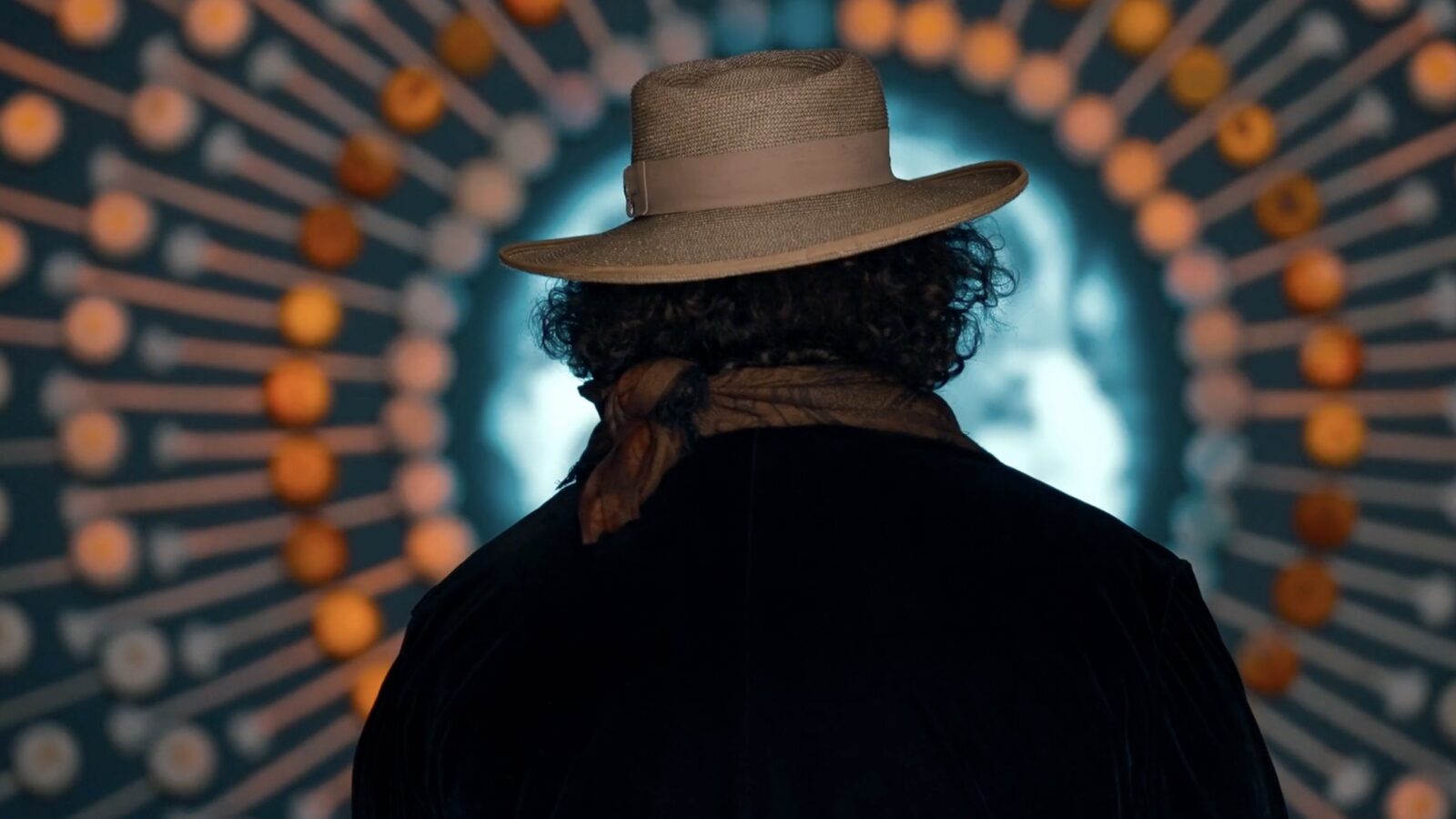
Indigenous curator Nigel Borell’s groundbreaking Māori art exhibition becomes both a cultural triumph and a battleground for power, captured with extraordinary behind the scenes access in Chelsea Winstanley’s directorial debut feature, TOITŪ Visual Sovereignty.
TOITŪ Visual Sovereignty, the debut directorial feature from Academy Award nominated producer Chelsea Winstanley, goes behind the scenes of the largest Māori art exhibition in Aotearoa New Zealand’s history. Following curator Nigel Borell’s vision for Toi Tū Toi Ora: Contemporary Māori Art, the film captures both its record-breaking success and the behind the scenes conflicts that arise when Indigenous sovereignty challenges institutional power. Featuring rare access and the voices of celebrated artists such as Shane Cotton, Emily Karaka, Taika Waititi, Brett Graham, Ngahina Hohaia, the Mataaho Collective and Reuben Paterson, this is a powerful portrait of cultural resilience and authorship.
The screening will be followed by an online talk with director Chelsea Winstanley.
Director: Chelsea Winstanley
Friday 2nd of October at 9:30 PM
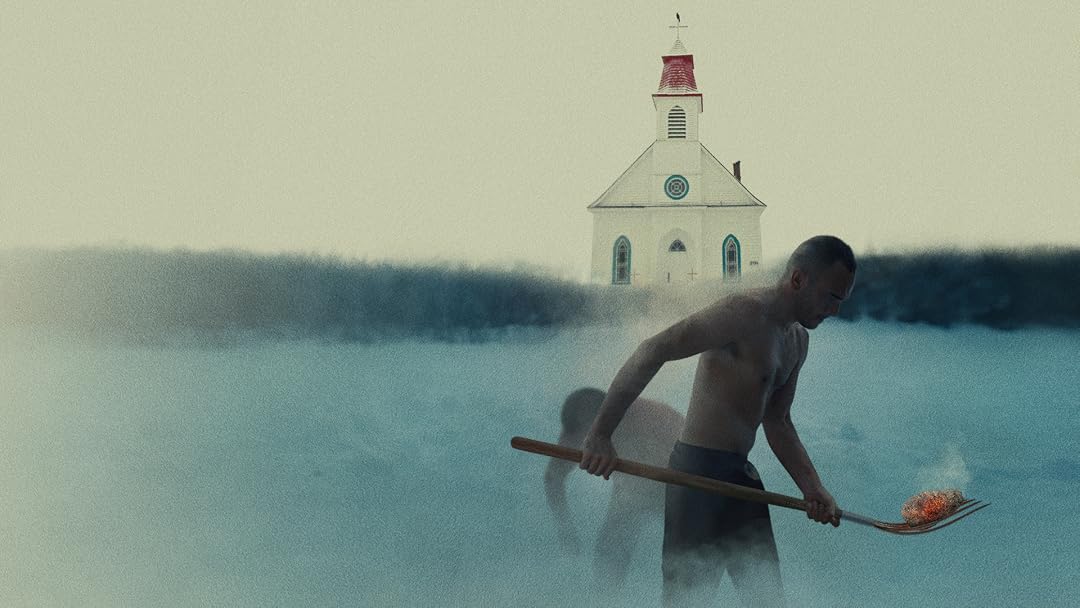
SUGARCANE
SUGARCANE, the debut feature documentary from Julian Brave NoiseCat and Emily Kassie, is an epic cinematic portrait of a community during a moment of international reckoning.
In 2021, evidence of unmarked graves was discovered on the grounds of an Indian residential school run by the Catholic Church in Canada, sparking a national outcry and setting off searches across North America. After years of silence, the forced separation, assimilation and abuse many children experienced at these segregated boarding schools is coming to light.
Set amidst a groundbreaking investigation, SUGARCANE illuminates the heartbreak and beauty of a community breaking cycles of intergenerational trauma and finding the strength to survive.
Director: Julian Brave NoiseCat, Emily Kassie
Saturday 3rd of October at 12:30 PM
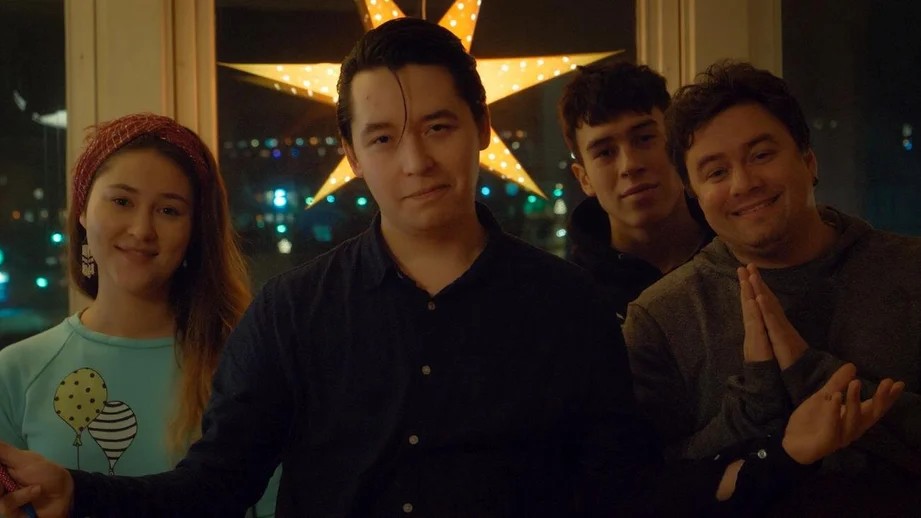
Ukiutoqqami Pilluaritsi (Krudt & Kærlighed)
Miki is a Greenlander, but he grew up in Sweden. For the first time, he travels to Nuuk to relax and spend time with his family. And perhaps to find out what really happened when he was conceived.
Before long, however, he gets swept up in the petty criminal activities of his cousin Kunuk’s friends. Suddenly, he finds himself responsible for two tons of stolen fireworks, surrounded by accomplices who do not quite understand him, a sweet girl who might become his, and the city’s mafia boss hot on his heels.
Kalaallit Nunaat (Greenland), 2019, 83 min.
Director: Otto Rosing
Saturday 3rd of October at 2:30 PM
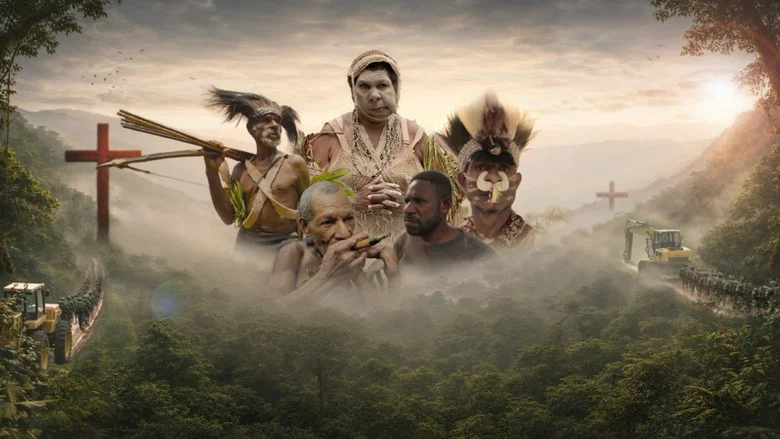
PIG FEAST
“Pig Feast” captures how the Marind, Yei, Awyu, and Muyu Indigenous peoples resist palm biodiesel and sugarcane bioethanol projects intended to fuel vehicles. Interwoven with their stories are the fraught issues of separatism and six decades of Indonesian military operations, closely tied to the occupation of the Land of Papua and the exploitation of its resources.
Combining vivid on-the-ground footage with investigative research, Pig Feast exposes the entanglements between national and multinational bioenergy interests and Indonesian political and developmental projects across three presidential administrations. The film also traces how networks of politicians, investors, military actors, and church institutions confront—and are confronted by—grassroots social movements and Indigenous communities.
Directors: Dandhy Laksono and Cypri Dale
Saturday 3rd of October at 4:30 PM
ARCTIC SHORT FILMS
A collection of short films from The Arctic followed by a talk with director Lindsay McIntyre and the Canadian Ambassador to Denmark, Carolyn Bennett.
TAMATTA ATAQATIGIIPPUGUT (We Are All Connected) (5 min.)
Greenlandic Inuk Arina is witnessing that their ancestral Inuit beliefs are disappearing in her community, and it must be one of the reasons why climate is changing. We don’t respect Nature the way we used to, and consumerism and pollution have taken over. People have forgotten to honor nature. Instead, profit is king, and we all just want more and more. Greenlandic artist Arina is determined to teach her children to honor the sea goddess Sassuma Arnaa and protect the sea, as it gives life but can also take it away. The film ‘Tamatta Ataqatigiippugut – We Are All Connected’ is a beautiful and lyrical declaration of love for a world that is bigger than ourselves. And a reminder to respect the forces of nature that frame our lives.
SUKKAILUTIT UQARUK (Say It Slowly) (5 min.)
Through physical activity and contact, ancestral tongue, creation of hand, dance, migration and reconnection to whenua, these stories express the inherent and immersive connection between us and our ties to the lands from which we come from.
A moving parallel between language loss and climate change, highlighting personal and communal resilience.
Ashley Qilavaq-Savard is an Inuk writer, artist, and filmmaker from Iqaluit. Ashley explores decolonization and Indigenous narratives through her artistic practice.
VUOGÁIDUVVAN (Adaptation) (5 min.)
Sámi filmmaker Aslak Paltto has first hand experience as a reindeer herder of the negative impacts a changing climate has on reindeer herding. During the last five years, the harsh conditions led to experiences with government officials and their predefined helping mechanisms. It became clear that the Finnish system doesn’t work in terms of helping the reindeer herders and getting aid when needed. Three years ago, the first sightings of a new parasite in the northernmost region of Finland began spreading all over the Sámi homeland area. There was an epidemic in the southern regions 20 years ago prior, but recent hot summers saw a return of the parasite, affecting Sápmi. In the film, Nils-Jonas, a reindeer herder in an area where traditional Sámi reindeer herding methods are used, is forced to feed the reindeer in order to avoid them dying from hunger and suffering because the grazing lands are frozen, a direct impact of the changing climate.
DENEEGE LET GHU KK’OTS’EEDENEEYH TE HET HOOZOONH TS’E DENOTS’EDENEEYH (We Get Better When We Tan Moose Hides) (5 min.)
The tradition of tanning hides with brains was once practiced by every Dené person in Alaska. An art that was nearly lost by assimilation, Kathleen Hildebrand works with a group of Dené women at her urban backyard hide camp in the heart of Chen’o (Fairbanks) to revive this tradition.
One of the few films out there narrated in Denaakk’e, we learn alongside the women how the hides have healing.
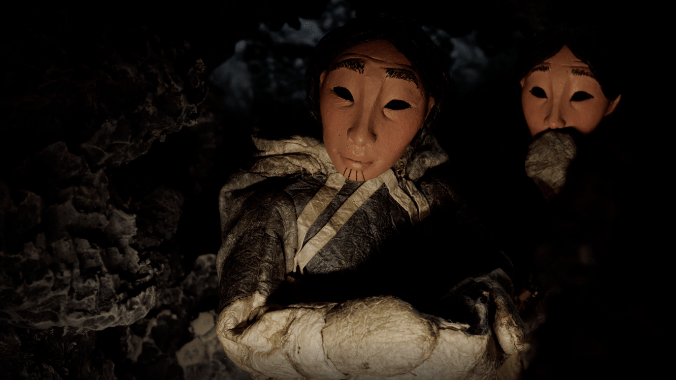
MANGITTATUARJUK (14 min.)
While everyone is busy preparing for the coming winter, two girls wander away from their camp. They discover beautiful stones, and begin collecting them. Each stone is more beautiful than the last, and the trail leads them farther and farther away from camp. But what starts out as a peaceful afternoon on the tundra quickly turns dangerous when the girls find themselves trapped in the cave of Mangittatuarjuk– the Gnawer of Rocks! They must find a way to outsmart this fearsome creature in order to escape.
SIKOQQINNGISAANNASSOOQ (16 min.)
A remote Inuit community in Kalaallit Nunaat (Greenland) faces dramatic transformation of their sea ice by climate change.
Iceberg-projected interviews are punctuated with Kalaallisut words describing their disappearing winter environment. Inscribed in the ice by the island’s youth, they reflect climate change that originates a world away.
With summer sea ice predicted to be lost from the High Arctic before 2050, Inuit communities’ winter traditions are already changing dramatically.
NIGIQTUQ (The South Wind)
By Lindsay McIntyre, 2023, 17 min.
In 1938, having left herNunavuthome with her mother Kumaa’naaq, youngMarguerite must negotiate the unspoken pressures of a new life in the South. When anextraordinary letter arrives from home, Marguerite discovers what’s really expected of her.Based on a true story.Logline:Young Marguerite and her mother Kumaa’naaq must negotiate the unspoken pressuresof a new life in the South after leaving their home in Nunavut in 1938. Based on a true story.
Misc., 2026, 96 min.
Directors: Misc.
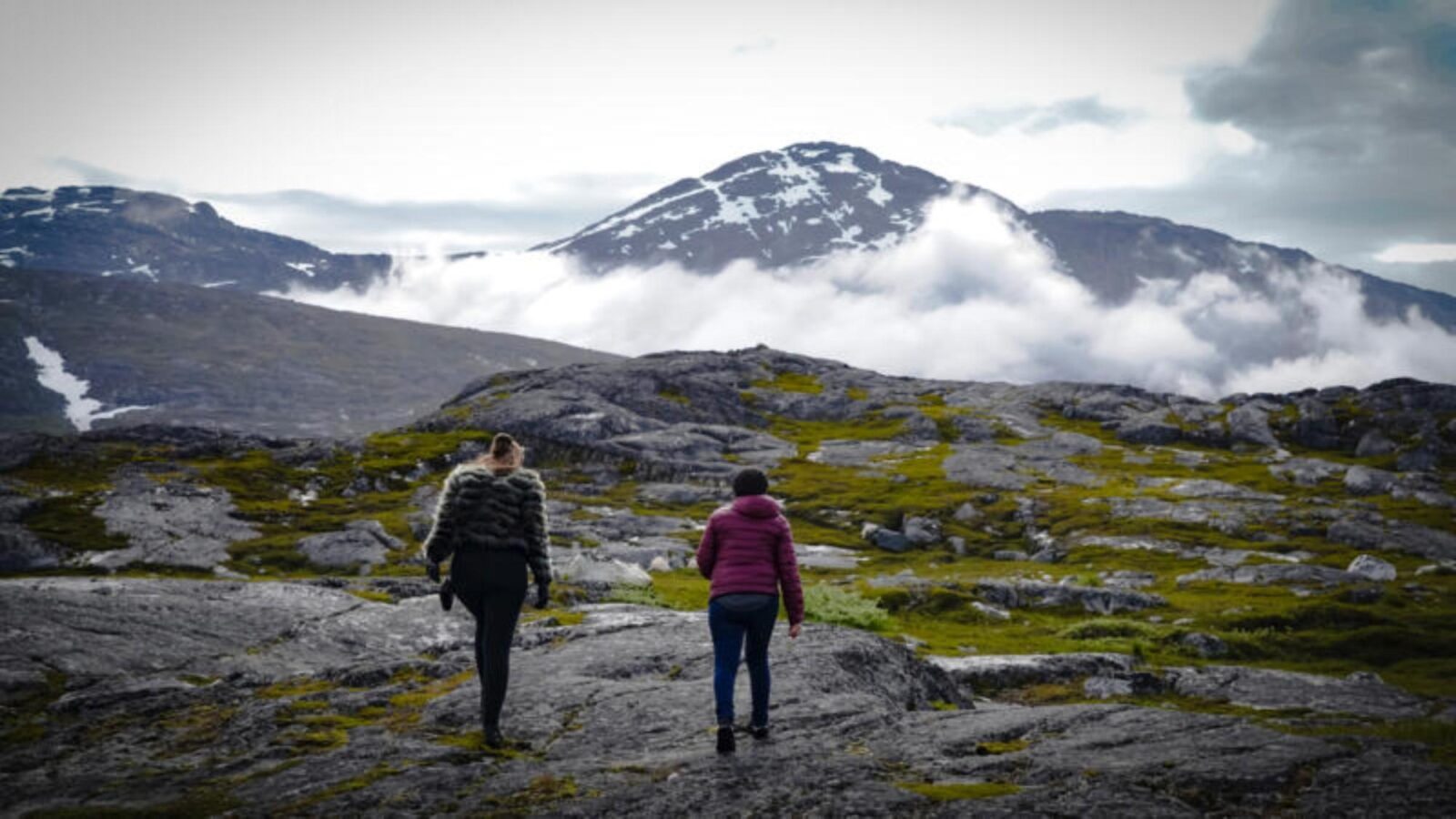
Saturday 3rd of October at 7 PM
WALLS – AIKINNI INUK
Two strong Greenlandic women are united by a shared traumatic past and a chaotic present. One is behind bars, the other behind a polished facade. A moving journey in search of justice, freedom, and a second chance at life.
Ruth, a Greenlandic woman, has spent nearly half her life in prison, including the last 12 years in preventive detention for an indefinite period, trapped in a legal limbo between Greenland and Denmark that continually pushes her freedom further into uncertainty. One day, however, she meets Nina, who is visiting the prison as part of a film project. Their encounter marks the beginning of a deep friendship that develops across the prison walls.
Despite their very different life circumstances, the two women discover that they have more in common than they initially realized. Slowly, they come to understand that they can help each other break free from the traumas of the past and the chains of imprisonment.
Walls is a moving and important story about love, human empathy, hope, and the struggle for a second chance. It is told from the perspective of a Greenland where neither the United States nor Danish politicians dominate the narrative, and where words such as independence and freedom carry a very different meaning.
The screening will be followed by a talk with director Sofie Rørdam and producer Emile Peronard.
Kalaallit Nunaat (Greenland), 2025, 75 min.
Directors: Nina Paninnguaq Skydsbjerg og Sofie Rørdam
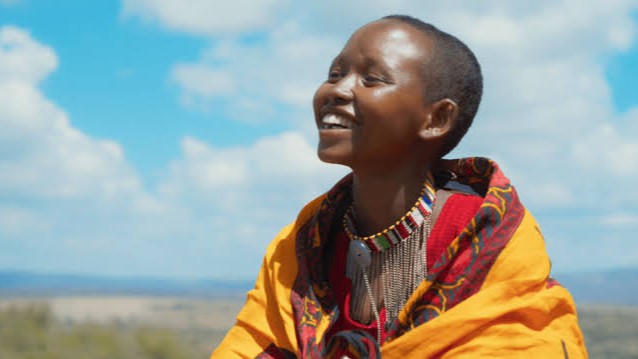
Saturday 3rd of October at 9:30 PM
SARAH
Sarah is a young Maasai girl whose world shifts as her family faces a momentous decision: whether to adhere to traditional rites or embrace change. Unlike many girls in her community, Sarah has been allowed to attend school and has big dreams for her future. Her best friend Evelyn walks her to school every day yearning to learn as Sarah does.
Unbeknownst to Sarah, financial hardship has struck her family, and a wealthy suitor has offered a dowry for her hand in marriage. This proposal forces the family to consider FGC as part of the traditional pathway to marriage. As her mother weighs the advice of advocates against FGC, Sarah’s father struggles with the societal and economic pressures to conform to tradition. Meanwhile, Evelyn faces her own battle as her family pushes her towards the cut in preparations for marriage.
Through the courage of young Maasai warriors advocating for change, Sarah begins to believe she might have a voice in her future. Sarah is a tale of resilience, love for culture, and the courage to dream beyond the limits imposed by society.
Director: Nick Reding
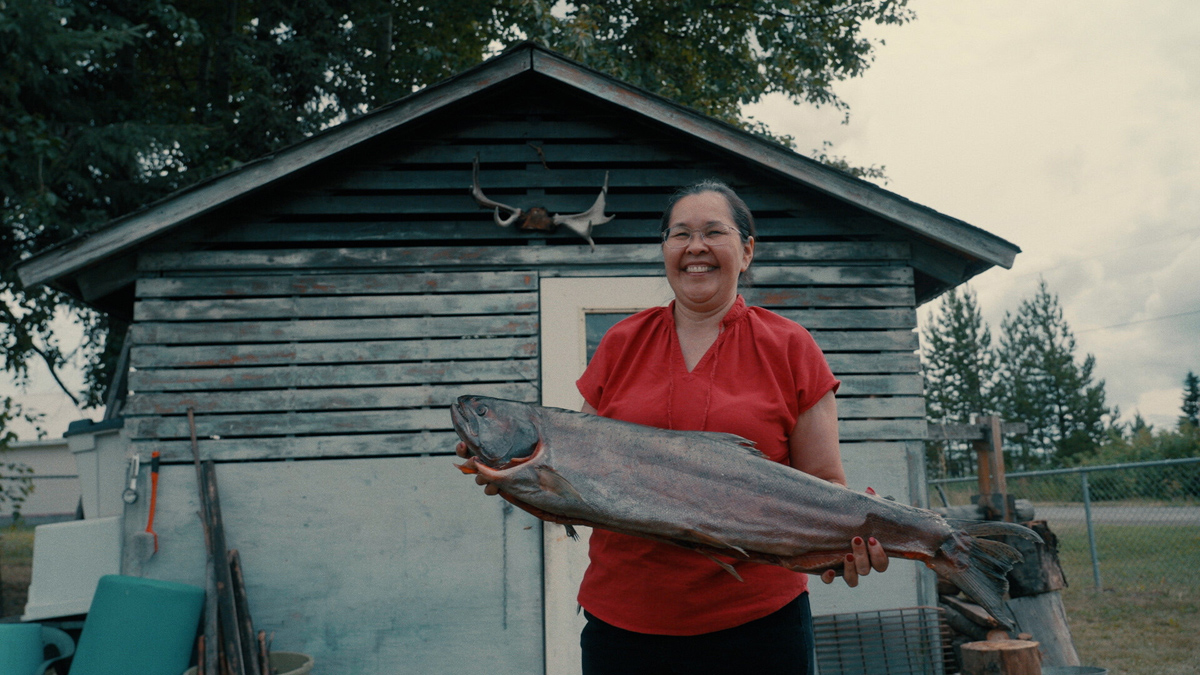
Sunday 4th of October at 12:30 PM
THE SPIRIT WHO SWIMS + CUT KNIFE CREEK
This screening is appropriate for children.
CUT KNIFE CREEK
By Beric Dean Manywounds, Ben Pipestem, Alanna Bluebird-Onespot, and Ryan Von Hagen, 2023, 8 min.
A Oral History animated story for language preservation.
Seven Tsuut’ina men refuse to turn back despite 3 dark omens urging them to, they come upon a Cree camp which leads to battle and death in a supernatural way. This is a traditional story of sacrifice, learning from nature, gentle acts of humanity, and community.
THE SPIRIT WHO SWIMS
By Bev Sellars and Garry Tutte, 2024, 56 min.
There are two economies that live along the waterways; the monetary economy driven by capitalism and profit, and the Indigenous economy driven by a symbiotic relationship with what swims in the rivers and grows and walks on the land. The Spirit Who Swims highlights this ‘clash of cultures’ by focusing on the spiritual significance the Salmon has for Indigenous peoples along the Fraser River.
Through stunning aerials and vivid underwater cinema, we join the Spirit Who Swims as they travel over 1000 kilometers on their annual migration route from the ocean to their spawning grounds in the lake and streams of the mountains. Along the way, we encounter Indigenous people in four unique, riverside communities, and learn of their deep connection to the Salmon and the struggles endured by each.
The Spirit Who Swims is more than just a documentary, it is a record of the challenges facing First Nation communities along the Fraser River. It is an Indigenous-rooted manifesto for restoring balance to our natural world.
Directors: Misc.
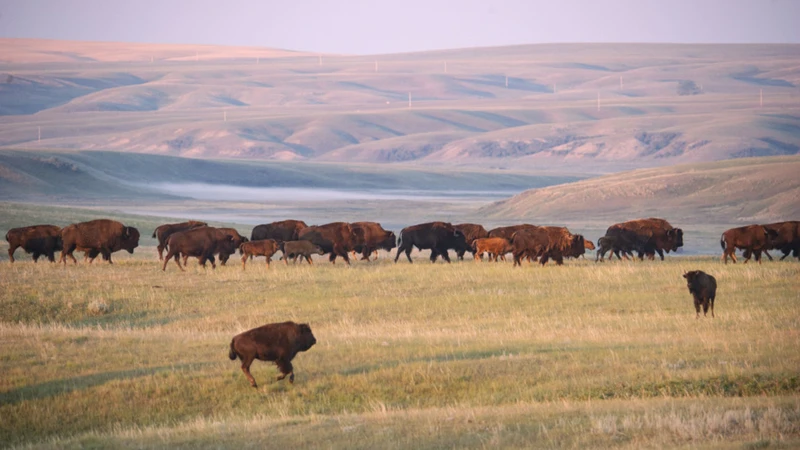
Sunday 4th of October at 3 PM
SINGING BACK THE BUFFALO
In a time of immense environmental degradation and global uncertainty, the buffalo can lead us to a better tomorrow. After a dark recent history, the buffalo herds of North America are awaiting their return, aided by dedicated Indigenous activists, leaders and communities, including award-winning Cree filmmaker Tasha Hubbard (nîpawistamâsowin: We Will Stand Up). Together with Blackfoot Elder Leroy Little Bear, Hubbard weaves an intimate story of humanity’s connections to buffalo and eloquently reveals how their return to the Great Plains can indeed usher in a new era of sustainability and balance. On her journey, Hubbard explores the challenges faced by buffalo allies and shares the positive steps already taken towards the ultimate – but uncertain – goal of buffalo rematriation. Richly visualised and deeply uplifting, SINGING BACK THE BUFFALO is an epic reimagining of North America through the lens of buffalo consciousness and a potent dream of what is within our grasp.
Director: Tasha Hubbard
Sunday 4th of October at 5 PM
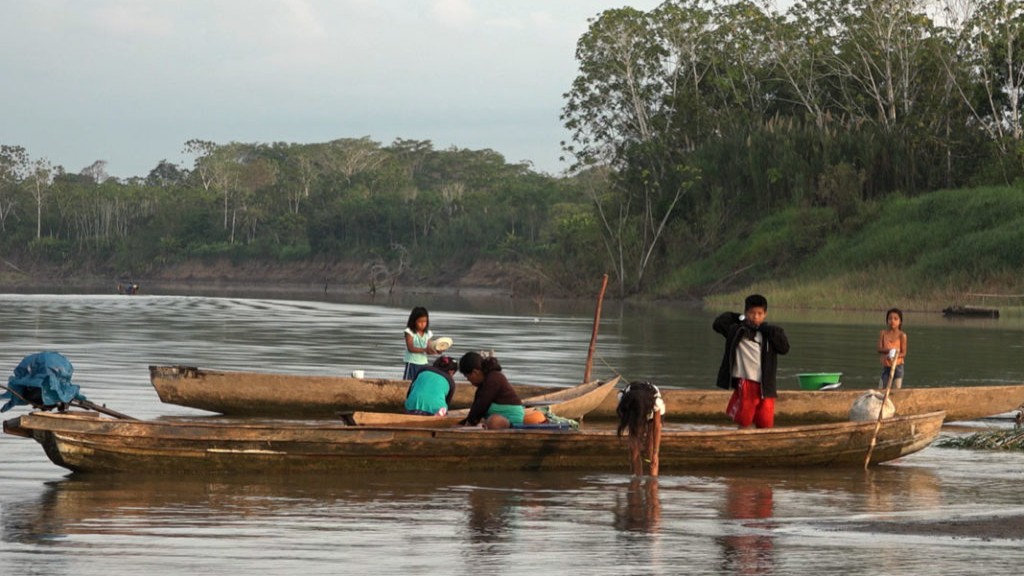
KARUARA, PEOPLE OF THE RIVER
Mariluz Canaquiri says her river is a more than just a body of water, it’s a living being. The Marañón River deep in Peru’s Amazon region is home to a vast network of spirit villages ruled by the Karuara, which means people of the river in Kukama-Kukamiria, Mariluz’s indigenous language.
The Karuara’s universe mirrors human society with an aquatic twist: river spirits lounge in hammocks made of boa constrictors, they smoke sardines and wear stingray hats and catfish shoes. Laughing Karuara children ride to school on giant turtles or play football with an inflated blowfish in the film’s stunning hand painted animations.
Behind their playfulness, the Karuara are powerful spirits. When a human is ill, indigenous shaman call on Karuara healers to cure their patient. Mariluz’s uncle must ask the river spirits for permission before fishing or risk going hungry. The Karuara are metaphysical ecologists; they maintain the delicate balance of life in the Amazon’s waterways. For centuries the Kukama people have depended on their rivers and spirit protectors for survival.
But Mariluz says the old ways are being forgotten and her people face cultural genocide. While foreign companies earn millions from the Amazon’s resources, indigenous communities lack basic development like schools, health care and clean water. She leads a federation of Kukama women who file a ground breaking lawsuit demanding the Peruvian government recognize the Marañón River as a legal person, with rights.
In a world that puts a price tag on nature, this film takes viewers inside the magic and beauty of the Amazon region and reminds us of our sacred connection to water.
The screening will be followed an online talk with director Stephanie Boyd.
Peru/Canada, 2024, 77 min.
Director: Stephanie Boyd and Miguel Araoz Cartagena.
Sunday 4th of October at 7 PM
ÁRRU
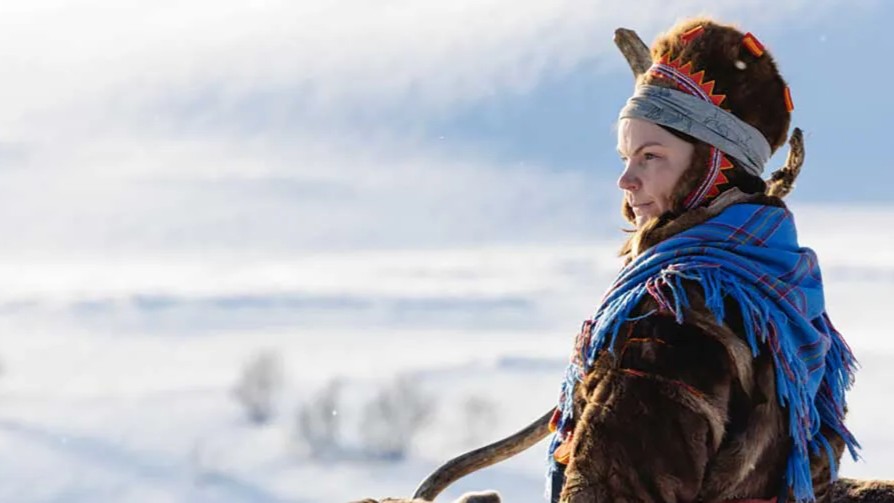
Amid the breathtaking landscapes of Sápmi, reindeer herder Maia fi ghts to protect her ancestral lands from a looming mining project. As protests rise, she turns to her charismatic uncle Lemme for help, but his presence reignites deep-buried traumas. Maia must choose: save the land at the cost of her family or surrender it to break the silence.
Director: Elle Sofe Henriksen
Sunday 4th of October at 9 PM
THE BATTLE FOR LAIKIPIA
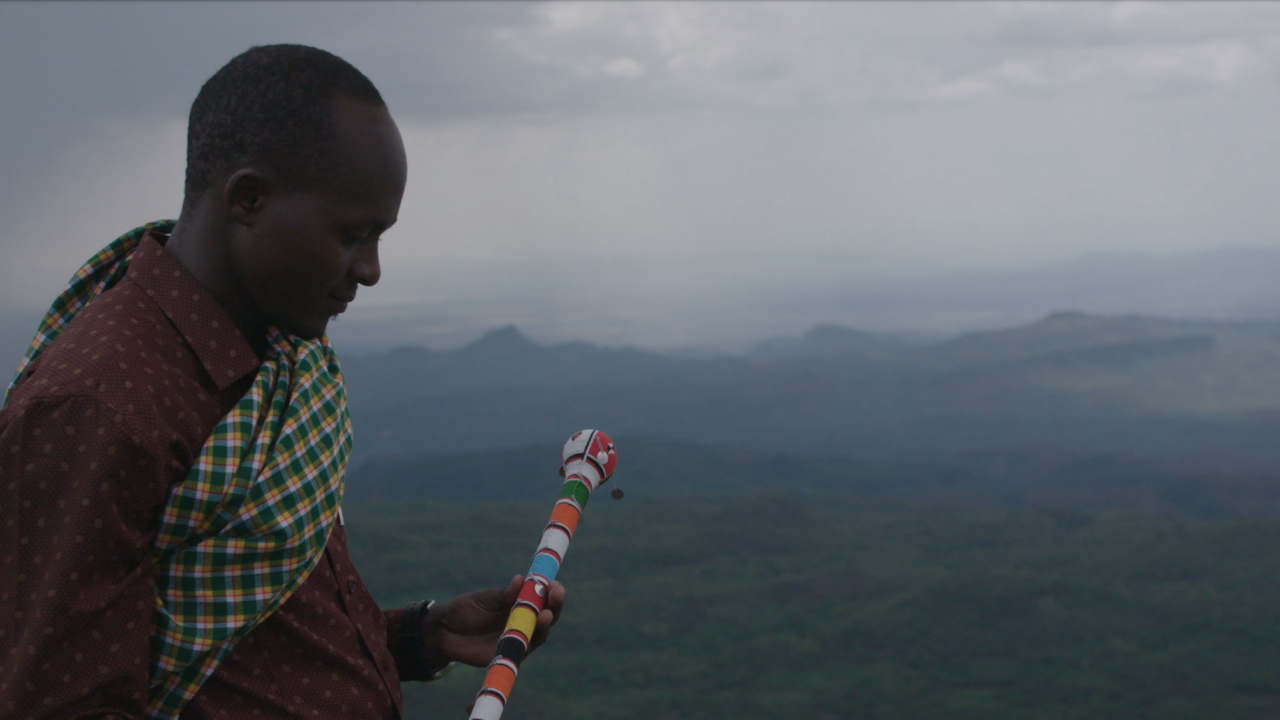
For centuries, Kenya’s Laikipia region has been a grazing route for indigenous pastoralist communities. It is also home to white ranchers and conservationists who settled there during the British colonial era and stayed after Kenya’s independence in 1963.
Since 2017, we have intimately filmed our characters as they confront a rapidly changing world. Laikipia has been feeling the ravaging effects of climate change for decades; the pastoralists, the ranchers and conservancies rely on Laikipia’s grasslands to sustain their cattle and the wildlife. When drought and elections collide, conflict erupts.
Our story goes beyond the headline grabbing conflict. Exploring identity, the complicated legacy of British colonialism, and the intersection with climate change, all while happening during the most fragile moment of our planet.
Directors: Daphne Matziaraki and Peter Murimi